Understand the different types of catheters

Lisa | Coloplast Care Advisor

Urinary catheters are sometimes necessary when someone cannot naturally empty their bladder. A urinary catheter is a tube with two holes which is inserted into the body to drain urine from the bladder.

There are several different types of urinary catheters, which are inserted and used in different ways. Take a look below to get an overview of the differences between intermittent, indwelling, and suprapubic catheters.

Get an overview of the differences between intermittent, indwelling, and suprapubic catheters:

Your doctor will work together with you to find a solution that fits your needs.

Intermittent catheters 
  • Inserted whilst voiding the bladder and removed after use 
  • Procedure performed by onself
  • Supports natural bladder filling and emptying
  • Inserted via the urethra
  • Used with or without a collecting bag
  • Generally considered discrete 
Indwelling catheters
  • Left in place for extended wear (1-3 months)
  • Procedure performed by HCP
  • Inserted via the urethra
  • Used with a collecting bag
  • Often considered less discrete than intermittent catheters
Suprapubic catheters
  • Left in place for extended wear (1-3 months)
  • Procedure performed by HCP (usually in a clinic or hospital)
  • Inserted via the Abdomen/navel
  • Used with a collecting bag
  • Often considered less discrete than intermittent catheters

Intermittent catheters

Intermittent catheters are often recommended. These types of catheters may be used by yourself 4-6 times a day (or as prescribed by a healthcare professional), just long enough to drain your bladder, and then removed. This makes intermittent catheterisation the preferred method of bladder emptying as it is the closest you can get to normal bladder functioning: your bladder still stores urine as normal and you pass urine when you need to and when it fits your schedule, with the help of the intermittent catheter.1

“Using the ready-to-use, intermittent catheters was like being reborn. I could go to the bathroom normally again.”

Andrea | Living with MS

If you want to read more about Andrea’s journey with multiple sclerosis and the products he uses to manage his bladder (and bowel), head over to our Experience Stories.

Andrea | Living with MS

Your healthcare provider can teach you have to insert the catheter yourself. The catheter is a sterile device and is often pre-lubricated, reducing friction between the catheter surface and your urethra when you insert it.1 Using intermittent catheters should not hurt, and it is not harmful to your urethra or bladder; in fact, using an intermittent catheter is beneficial if you have problems voiding yourself naturally.2,3,4

With intermittent self-catheterisation, you decide when you pee. So, you have more freedom to do everything else.

Elisa I Living with MS

By doing intermittent self-catheterisation, you learn to recognise when your bladder is completely empty, and you become mindful of it. For people with MS, it’s important to be able to gauge how much room or how much time we have left before we need to catheterise.

Michael I Living with MS

Other types of catheters

Indwelling and suprapubic catheters are other types of catheters that can be used to drain the bladder. They work differently to intermittent catheters.

Indwelling catheters5

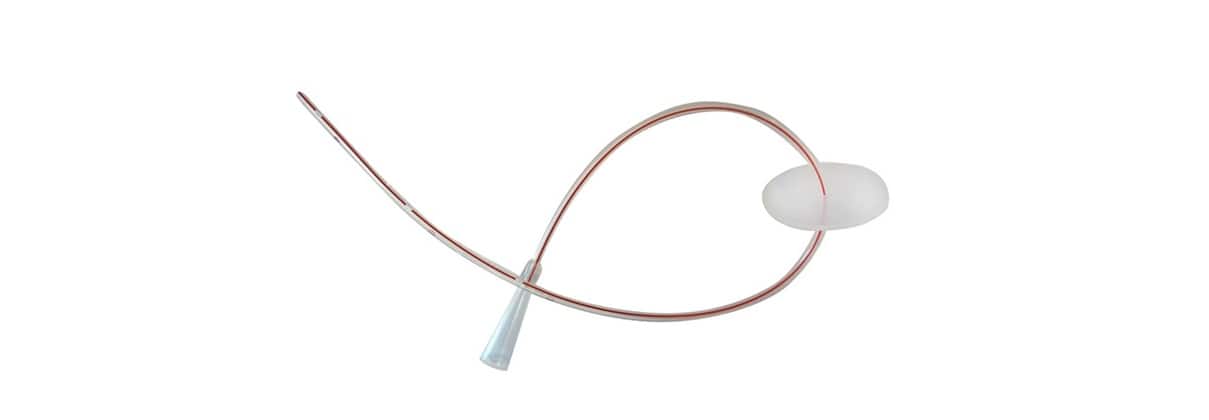
Indwelling urinary catheters are inserted via the urethra into the bladder. The key difference to intermittent catheters is that indwelling catheters are held in place with a small water-filled balloon which prevents it from dropping out. Indwelling catheters are fitted by a healthcare practitioner and typically need to be changed every 1-3 months.

The catheter is connected to a urine collecting bag which is standardly strapped to the inside of the leg or sometimes attached to a stand on the floor.

Some indwelling catheters can also be fitted with a valve. When closed, it allows the bladder to fill with urine as normal, and when opened, the urine can then be drained into a toilet. 

An indwelling catheter may be suggested as a treatment if a person is not able to self-catheterise. Due to the more permanent presence of an indwelling catheter, this type of set up may impact an individual’s sex life.


Suprapubic catheters5

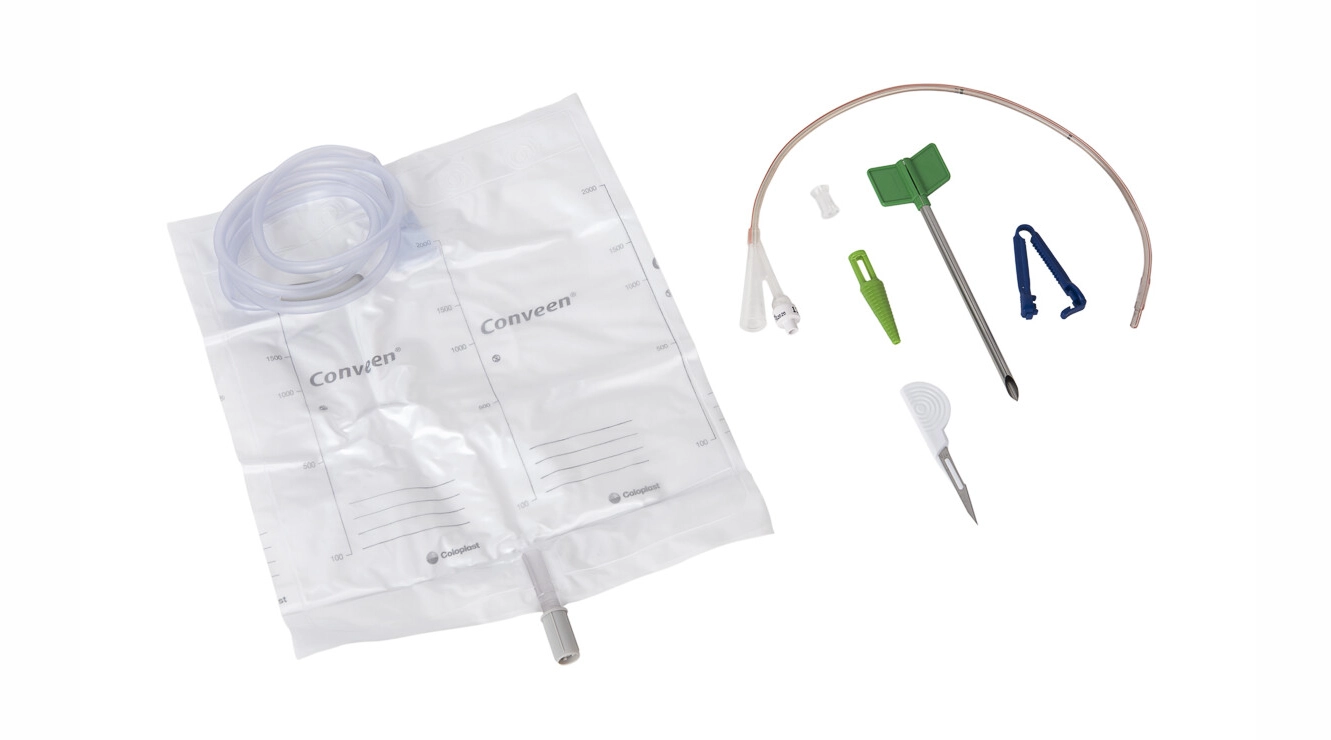
A suprapubic catheter is another type of catheter that is left in place over a longer time, usually being changed every 1-3 months. Installing a suprapubic catheter requires an operation. Rather than being inserted up through the urethra, suprapubic catheters are inserted via a small hole in the abdomen and then directly into the bladder.

A suprapubic catheter would be needed if the urethra was blocked or otherwise damaged, or when the person was unable to use an intermittent catheter.  

Just like indwelling catheters, a collecting bag or valve is used to control how the urine is drained from the bladder. 

Some individuals may favour this option if they find IC difficult to perform.

PM-40000